San Diego Ironworks Journal
Iron Gates That Impress: Blending Security with Style
Published September 25, 2026
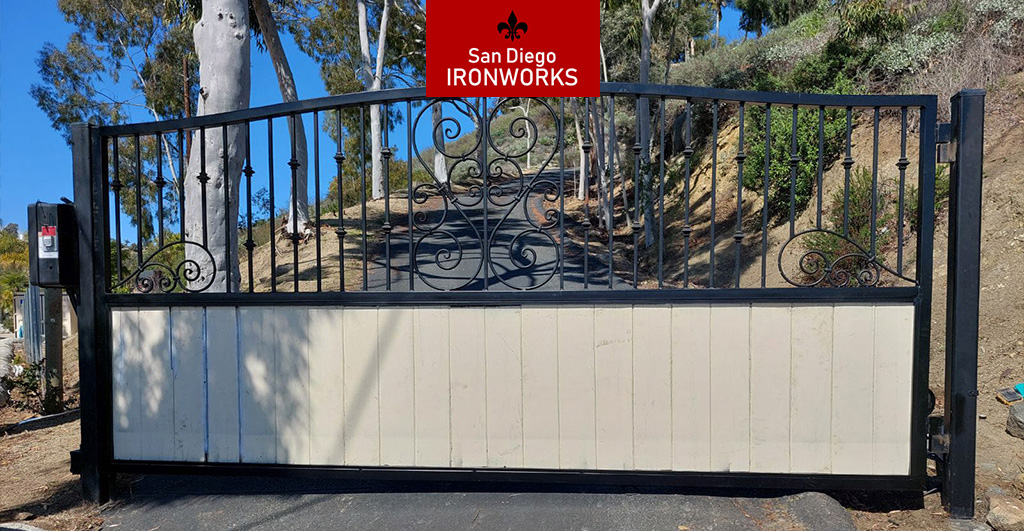
The entry gate is often the first piece of ironwork people notice. It establishes how visitors approach the property, how vehicles and pedestrians move through it, and how the home or business presents itself from the street. A strong iron gate design does not have to look severe. With the right proportions, spacing, hardware, and finish, it can create a clear boundary while still feeling welcoming.
Begin with the way the entrance is used
List the everyday users before selecting a pattern. A pedestrian gate may serve family, guests, deliveries, and service providers. A driveway gate must account for vehicle width, turning movement, visibility, and the location where a driver can safely wait. Commercial entrances may add staff access, controlled entry, or higher traffic frequency.
These practical details influence whether a gate should swing, slide, open manually, or be automated. They also determine where the latch, hinges, keypad, intercom, and emergency release should be placed.
Use proportions to create a polished look
Scale matters as much as ornament. A tall gate with undersized posts can feel unbalanced, while a small gate with oversized decorative elements may overwhelm a modest entry. The frame, rails, picket spacing, posts, and adjacent fence should read as one composition.
Traditional homes may suit spear tops, scrolls, or curved profiles. Contemporary properties often benefit from straight lines, simple pickets, and a quiet finish. The goal is not to copy a pattern from another home; it is to create a gate that feels native to this property.
Design for security without losing visibility
Security can come from a gate’s height, strength, controlled latch, limited access, and relationship to the surrounding fence. Open pickets preserve visibility and can make it easier to see visitors before opening the gate. More private configurations can screen a courtyard or driveway, but they should be reviewed for sight lines and safe vehicle movement.
For homes that need more control, consider an automatic gate operator, keypad, intercom, or other access-control option. The equipment should be selected with the gate’s weight, size, and usage in mind.
Do not overlook the finish and hardware
Hinges, latches, rollers, closers, handles, and operator components are touched and moved more often than the fence. Choose hardware that feels comfortable to use and fits the visual language of the gate. The finish should be planned for the property’s exposure, especially near the coast or in areas with irrigation and landscape contact.
Surface preparation and protective coating are important to the long-term appearance of ironwork. Ask how the finished gate should be cleaned and what to do if the coating is scratched.
A simple gate design checklist
- Confirm the opening dimensions and the movement required for vehicles and pedestrians.
- Choose a pattern that complements the architecture and adjacent fence.
- Review visibility, privacy, latch height, and lighting at the entrance.
- Decide whether manual or automatic operation is the better fit.
- Plan the finish, drainage, and maintenance before fabrication begins.
San Diego Ironworks designs and installs custom iron gates for properties throughout San Diego County. Request a quote to discuss an entry that protects the property and makes a memorable first impression.
Ready to improve your property?
Let's plan your custom ironwork project.
Tell us what you are planning, where the project is located, and what you want the finished work to accomplish. Our team can help you explore the right design, materials, and installation approach.